Learn More About Our Landscaping Services
Outdoor spaces quietly influence daily life, from the first impression a home makes on the street to the way a business welcomes visitors before they reach the entrance. Strong landscaping is not just decoration; it can improve comfort, support drainage, guide foot traffic, reduce upkeep problems, and strengthen property appeal over time. Knowing how residential landscaping, commercial landscaping, and landscape design services differ helps owners set priorities, spend wisely, and build spaces that work in every season.
This article follows a simple five-part outline so readers can move from the big picture to practical decisions. It begins by explaining how the three service categories connect, then explores residential landscaping, commercial landscaping, and professional design in more depth. The final section brings everything together with advice for homeowners, business owners, and property managers who want reliable results and a plan that lasts.
Understanding the Three Main Types of Landscaping Services
Landscaping is often treated like a single service, but in practice it is a broad field that combines horticulture, construction, maintenance, design thinking, and long-term property management. Residential landscaping services, commercial landscaping services, and landscape design services overlap, yet they serve different needs and operate at different scales. Understanding those differences is the first step toward making sensible choices instead of buying a package that looks impressive on paper but does not match the property.
Residential landscaping is centered on personal use. A homeowner usually wants an outdoor space that feels inviting, reflects individual taste, and supports everyday activities such as relaxing, entertaining, gardening, or giving children and pets a safe place to play. Commercial landscaping works under a different set of pressures. It must support appearance, safety, durability, traffic flow, and predictable maintenance across larger or more heavily used sites. A retail center, office building, hotel, healthcare campus, or multifamily property may all need polished grounds, but the reasons behind that polish are practical as much as visual. It is part welcome mat, part operations strategy.
Landscape design services sit between vision and execution. They translate ideas into a usable plan by considering grading, drainage, planting, lighting, materials, circulation, and budget. Design can be used for a backyard renovation, a new housing development, or a commercial plaza. In other words, design is the map, while installation and maintenance are the journey. When the map is clear, the journey tends to be smoother.
Several real-world factors explain why this distinction matters. The U.S. Environmental Protection Agency has long highlighted stormwater runoff as an important site-planning issue, which means grading, permeable surfaces, and planting strategy are not cosmetic details. The U.S. Department of Energy has also noted that well-placed trees can help shade buildings and reduce summer heat gain, showing that landscaping can affect comfort and energy use. Those are concrete examples of why outdoor planning belongs in the same conversation as building performance.
At a glance, the three service types usually differ in focus:
• Residential landscaping: comfort, curb appeal, privacy, lifestyle, manageable upkeep
• Commercial landscaping: consistency, safety, brand presentation, high-traffic durability, service schedules
• Landscape design: site analysis, concept development, technical planning, material selection, long-term function
When property owners understand this structure, they ask better questions. Instead of simply saying, “We need landscaping,” they can define whether they need routine maintenance, a full redesign, seasonal enhancements, or a complete site strategy. That clarity saves time, prevents mismatched expectations, and often leads to better value over the life of the property.
Residential Landscaping Services: Comfort, Character, and Daily Living
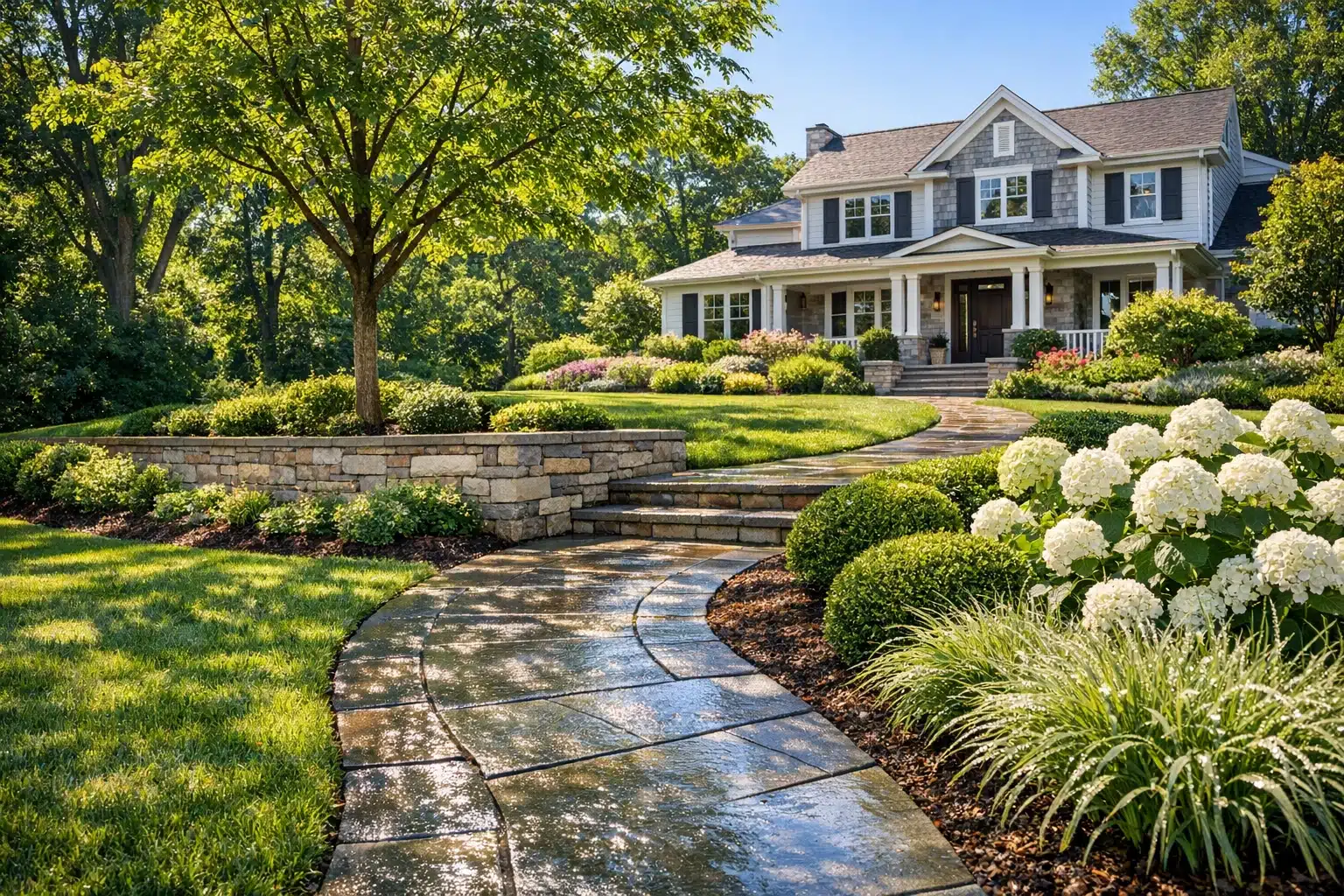
Residential landscaping services are built around one central idea: people should enjoy living in their outdoor space, not feel like they are constantly fighting with it. A well-planned front yard can improve curb appeal, but the real strength of residential landscaping appears in the details of everyday use. The patio that catches the evening shade, the path that keeps muddy shoes off the kitchen floor, the planting bed that looks good in spring and still has structure in winter, and the lawn that survives family activity without demanding endless repairs all contribute to a better home experience.
Most residential services fall into a few common categories. Some homeowners need regular maintenance, while others are looking for a one-time transformation. A typical service mix may include:
• lawn mowing, edging, fertilization, and weed control
• garden bed design, planting, mulching, and seasonal color updates
• tree and shrub care, including pruning and health monitoring
• irrigation installation, repairs, and water-use adjustments
• outdoor lighting, walkways, patios, retaining walls, and drainage improvements
• privacy planting, screening, and low-maintenance landscape upgrades
The best residential work balances aesthetics with realism. A yard may look beautiful in a photo, but if the plant choices are wrong for the climate, sunlight, soil, or irrigation setup, beauty fades quickly. Native and regionally adapted plants are often a wise choice because they tend to require less water, fewer chemical inputs, and less intervention once established. That does not mean every home should look wild or informal. It means the design should fit local conditions rather than ignore them. A polished garden can still be water-conscious, pollinator-friendly, and manageable for busy households.
Budget and lifestyle also shape residential decisions. A retired couple may want structured planting beds and quiet seating areas. A family with young children may prioritize open lawn, durable surfaces, and secure fencing. Someone who travels often may prefer drought-tolerant plants, automated irrigation, and a maintenance plan that keeps the property attractive without constant supervision. This is where professional landscaping becomes valuable: it helps translate vague preferences into choices that actually work. “Low maintenance,” for example, does not mean “no maintenance.” It usually means fewer pruning cycles, simpler irrigation zones, hardier plant selections, and materials that age well.
There is also a financial dimension. Real estate professionals frequently emphasize curb appeal because exterior presentation shapes a buyer’s first impression before an interior tour even begins. While no single planting plan guarantees a resale outcome, a cared-for landscape generally signals that the property has been maintained thoughtfully. It can make a home feel more complete and more livable. Even for owners with no plan to sell, the return can be personal rather than transactional. A good residential landscape turns unused square footage into a place for morning coffee, family meals, quiet reading, or conversations that drift into dusk. That kind of value does not always fit neatly into a spreadsheet, but homeowners feel it every day.
Commercial Landscaping Services: Image, Safety, and Performance at Scale
Commercial landscaping services operate on a larger stage, where appearance matters, but reliability matters just as much. For a business or managed property, the landscape is part of the customer experience, part of the employee environment, and part of the site’s operational health. Overgrown beds, patchy turf, blocked sightlines, poor drainage, or neglected entry areas can make a property feel disorganized before anyone steps inside. On the other hand, clean and consistent grounds suggest professionalism, care, and stability. In commercial settings, the landscape often speaks first.
The needs of commercial properties are broader than many people expect. Office campuses, retail centers, hotels, industrial parks, healthcare facilities, educational sites, and multifamily communities all rely on outdoor areas in different ways. A retail plaza may need strong seasonal color and crisp entrances to support foot traffic and tenant visibility. A healthcare campus may prioritize calm, accessible outdoor spaces with clear wayfinding. An industrial site may focus more heavily on durability, drainage, perimeter maintenance, and safe vehicle movement. The style changes, but the discipline remains the same: commercial landscaping must perform consistently.
That is why commercial service plans often emphasize scheduling, documentation, and risk reduction. Common elements include:
• routine mowing, edging, pruning, litter removal, and bed maintenance
• irrigation audits, leak detection, and seasonal system adjustments
• tree care and hazard monitoring for branches, roots, and visibility concerns
• enhancement projects such as replanting, mulch refreshes, lighting upgrades, and entry improvements
• drainage corrections, erosion control, and site cleanup after storms or seasonal shifts
Safety is a major differentiator between commercial and residential work. Landscapes affect pedestrian circulation, visibility near drive lanes, water accumulation around entrances, and the overall condition of hardscape edges. Poorly maintained shrubs can obstruct sightlines. Uneven surfaces and standing water can contribute to slips and trip hazards. In parking areas and entrances, landscaping must support access rather than compete with it. A good contractor understands that the goal is not just to make a site look green, but to keep it usable and orderly under daily pressure.
Commercial contracts also demand consistency across time. A property manager may be responsible for tenant satisfaction, brand standards, budgeting, and board or ownership expectations. That means landscaping must be measured not only by beauty, but by service quality, response time, and predictable outcomes. One month of neglect can undo the visual credibility built over a year. This is especially important for multi-site businesses that want a unified brand experience across locations. Uniform planting palettes, repeatable maintenance standards, and well-documented scopes of work help create that consistency.
There is a quieter benefit as well: better landscapes often improve how people feel at a site. Employees notice shaded break areas, cleaner walking routes, and more pleasant surroundings. Visitors notice order. Residents in managed communities notice whether shared spaces feel cared for or forgotten. Commercial landscaping is therefore both visible and strategic. It strengthens reputation, supports operations, and reduces the friction that poorly planned outdoor areas can create.
Landscape Design Services: Turning Ideas into Functional, Lasting Plans
Landscape design services are where intention becomes structure. Many property owners know what they dislike about a site, such as drainage problems, awkward traffic flow, empty beds, harsh sun, or a backyard that never feels finished. Fewer know how to solve those issues in a coordinated way. Design fills that gap by organizing space before money is spent on installation. It is the difference between buying parts and building a system.
A professional design process usually starts with analysis rather than decoration. The designer studies topography, drainage patterns, soil conditions, sun exposure, existing trees, utility constraints, access points, and the way people already use the site. For residential projects, that may lead to outdoor rooms, seating zones, play areas, screening, or kitchen-adjacent patios that support daily life. For commercial projects, the same process may shape circulation, visibility, parking lot islands, ADA-conscious routing, stormwater features, and planting schemes that can survive repeated wear. In both settings, the design must respond to conditions on the ground, not just trends on a mood board.
The design scope can vary widely, but it often includes:
• site measurements and evaluation
• concept sketches or layout options
• plant selection based on climate, maintenance goals, and seasonal interest
• hardscape planning for paths, walls, patios, plazas, or gathering spaces
• lighting ideas for safety, atmosphere, and visibility
• irrigation strategy and drainage solutions
• material recommendations and phased budgeting
One of the most valuable parts of design is that it reveals trade-offs early. A homeowner may want lush planting and a large lawn, but the site may have limited sun or a tight water budget. A business may want a dramatic entrance, yet also need clear sightlines and easy maintenance. Design helps resolve those tensions before installation crews arrive. It can also prevent a costly patchwork effect, where elements are added one by one without a unified plan. That piecemeal approach often leads to mismatched materials, awkward circulation, and repeated rework.
Today, strong landscape design increasingly includes sustainability as a practical issue rather than a marketing phrase. Water-efficient irrigation, native or adapted planting, mulch strategies, permeable paving, rain gardens, shade planning, and soil improvement can lower long-term resource use while making a site more resilient. The EPA’s guidance on stormwater and the continued growth of low-impact development practices have pushed many designers to think beyond appearance alone. A well-designed landscape can help slow runoff, support pollinators, reduce heat buildup around buildings, and create outdoor spaces that remain usable even in challenging weather.
Property owners should also understand the difference between design-only and design-build services. A design-only firm may prepare plans that can be bid out to installers. A design-build company can often take the project from concept through construction and, in some cases, long-term maintenance. Neither model is automatically better. The right choice depends on project complexity, desired oversight, budget control, and how much coordination the client wants to manage. However it is delivered, good design gives a property something every successful outdoor space shares: a sense that every element belongs there, as if the land has been edited rather than simply filled.
Conclusion: Choosing the Right Landscaping Service for Your Property
If you are deciding where to begin, the smartest approach is to match the service to the property’s purpose rather than chasing the broadest package. A homeowner may need residential landscaping that makes weekends easier and outdoor living more enjoyable. A business owner may need commercial maintenance that protects brand image, access, and day-to-day order. A developer, facility manager, or owner planning a major overhaul may need landscape design first, because a clear plan prevents expensive confusion later. Different properties ask different questions, and good service starts by answering the right one.
There are a few practical signs of a strong landscaping partner. The company should ask about goals, not just square footage. It should look at drainage, sun, traffic patterns, maintenance expectations, and budget realities before promising results. A solid proposal usually explains what is included, how often service occurs, what assumptions have been made, and which items may require separate pricing. Vague estimates can be tempting, but clarity usually saves money in the long run because it reduces misunderstandings and change orders.
When comparing providers, it helps to focus on a short checklist:
• experience with your property type, whether residential, commercial, or mixed-use
• realistic plant and material recommendations for your climate and maintenance level
• attention to irrigation, drainage, and long-term site performance
• clear communication, scheduling, and scope descriptions
• references, photos of completed work, and a willingness to explain design choices
It is equally important to think beyond installation day. Landscapes are living systems, not static products. Trees mature, roots expand, seasonal color rotates, irrigation needs change, and weather tests every decision. A beautiful site that cannot be maintained efficiently may become a burden. A modest design that respects the site and receives proper care often outperforms a flashy installation that ignores function. In that sense, the best landscaping is rarely the loudest. It is the work that continues to look right, move water properly, welcome people comfortably, and support the life of the property month after month.
For homeowners, that may mean creating a yard that feels like an extension of the house. For business owners and property managers, it may mean maintaining a site that reflects professionalism and works safely under constant use. For anyone starting from scratch, design services provide the framework that ties beauty to performance. The core message is simple: landscaping is most valuable when it is planned with purpose. When the right service is chosen at the right time, outdoor space stops being an afterthought and starts becoming one of the most useful parts of the property.